
When Gaps Are Invitations
Why stay when systems don't support the work

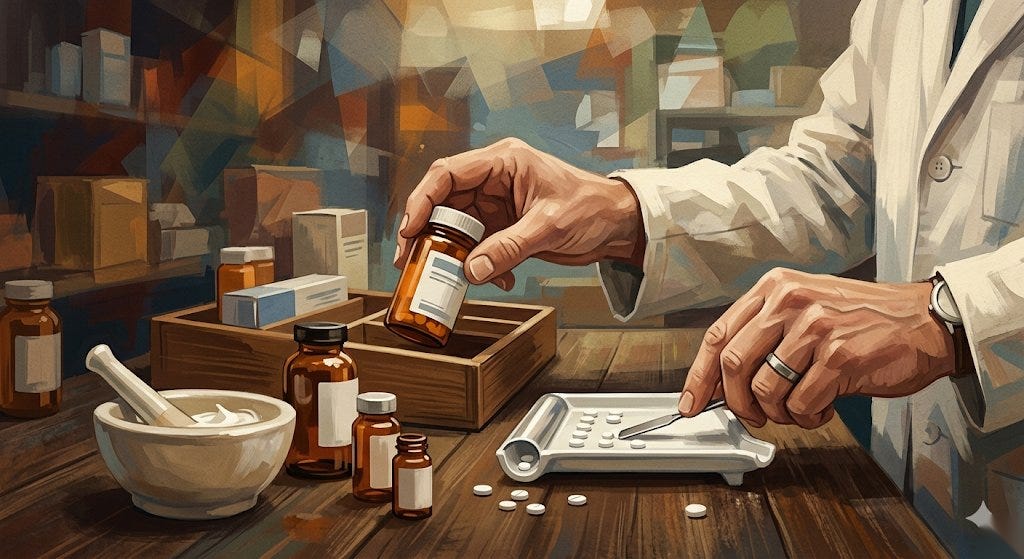
I’ve heard it several times now, from assistants, from newer pharmacists, from people early in their careers who came into this field with a clear vision of what pharmacy could be. They learned in school that this work is clinical, integrated, patient-centred. They step into a very busy community pharmacy and encounter something different: systems that don’t talk to each other, tools that fragment what should be whole, and metrics limited by decades-old reimbursement models rather than by what actually matters to patients.
The gap between what they imagined and what they’re experiencing is real. And in that gap, I’ve watched something happen, not just frustration, but clarity. They begin to see, very quickly, exactly where change needs to happen. Some of them step away. Others stay and begin to understand what I’ve come to know: the gaps aren’t obstacles to clinical care. They’re invitations to build it differently.
I know what clinical pharmacy looks like because I’ve seen it work. A patient with chronic pain who comes in not looking for another prescription, but for something tailored, a compounded cream formulated for their specific need. They come back weeks later and tell you it changed how they move, how they sleep. A person who’s been smoking for twenty years, and through a series of conversations, not lecturing, finds their way to quitting. They text you months later to say they’re still off cigarettes. A patient drowning in thirteen medications, confused about what to take when, and you spend time reorganizing it into something that makes sense. Even better, helping them recognize that some of those medications have accumulated over time and no longer serve them, gently setting them aside. They feel lighter.
These moments aren’t rare. They’re everywhere, in the gaps between the systems, waiting to happen. And once you’ve witnessed them, you can’t unknow them.
I’ve learned that waiting for the systems to align, for the infrastructure to catch up, for permission to practice clinically, that’s a surrender disguised as realism. Clinical work happens now, in the spaces between what exists: one person’s life better, one day at a time. A mountain is made of incremental change.
And the gaps themselves are instructive. Every time a system fails to integrate, every time you’re bridging incompatible data, that’s not just friction. That’s clarity. That’s the beginning of knowing what needs to change. When you see that clearly enough, you can’t look away.
Last year I volunteered for better access to greener inhalers—not because I set out to be an advocate, but because I’d seen the gap so clearly: patients struggling with regular devices, the environment bearing the cost, and the infrastructure not keeping pace with what’s possible. The gap itself demanded to be named.
That’s not separate from the daily work at the counter. It’s the same work, just at a different scale. Same clarity. Same refusal to accept what is when you’ve glimpsed what should be. That’s not hope in the sense of certainty. It’s hope in the sense of seeing clearly enough to know what needs to happen, and staying long enough to help it happen.